

+918048128529

Currently it only shows your basic business info. Start adding relevant business details such as description, images and products or services to gain your customers attention by using Boost 360 android app / iOS App / web portal.

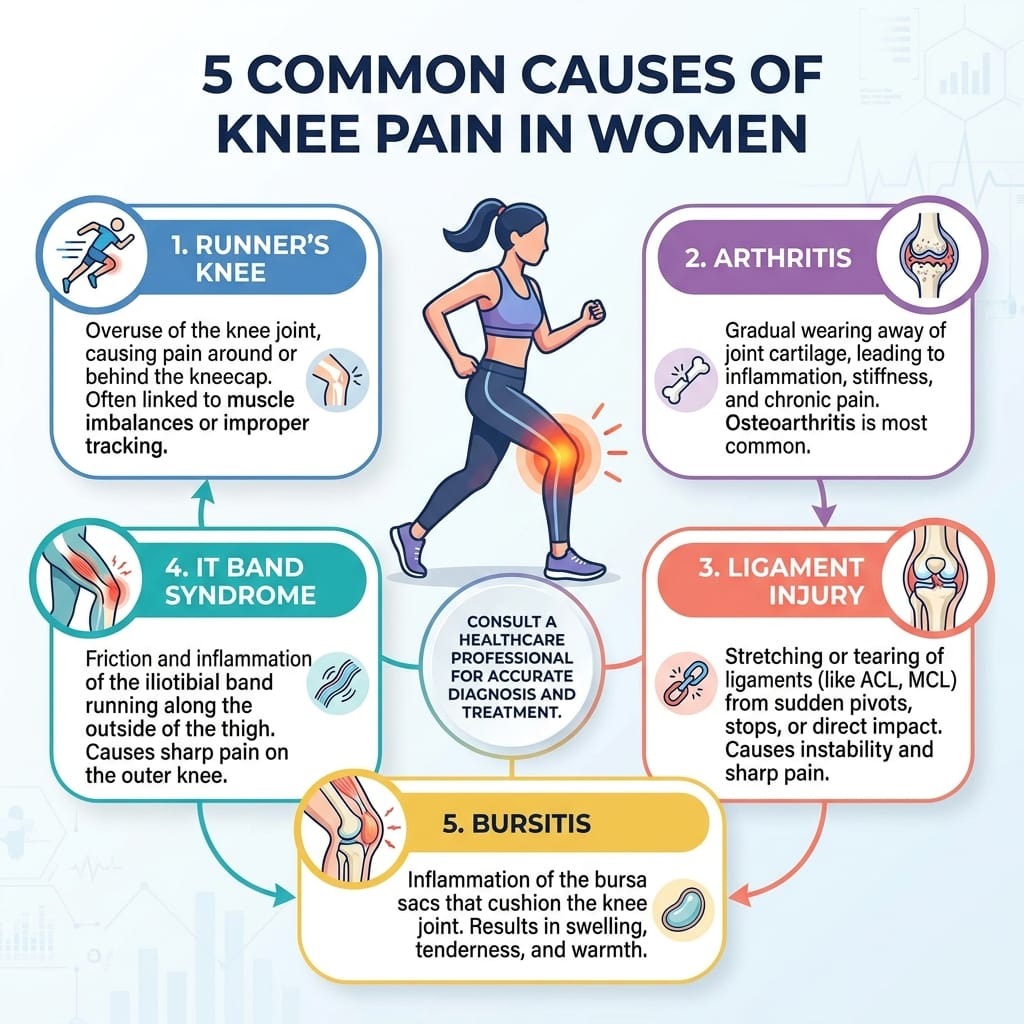
5 Common Causes of Knee Pain in Women Over 40 If you're a woman over 40 and dealing with knee pain that seems to have come out of nowhere, you're not alone. Hormonal shifts during perimenopause and menopause, combined with natural changes in joint cartilage, muscle strength, and bone density, make women in this age group especially prone to knee problems. Below, we break down the five most common causes of knee pain in women over 40 — and what you can do about them. 1. Osteoarthritis (Wear-and-Tear Arthritis) Osteoarthritis is the most common cause of knee pain in women over 40, and its risk rises sharply after menopause. As estrogen levels drop, cartilage — the smooth tissue that cushions your knee joint — breaks down faster and repairs itself more slowly. This leads to stiffness, swelling, and a dull ache that's often worse in the morning or after long periods of sitting. Common symptoms: stiffness that improves with movement, a grinding or clicking sensation, swelling after activity, pain that worsens with stairs or prolonged standing. 2. Menopause-Related Joint Pain Many women don't realize that menopause itself can directly cause joint pain, sometimes called 'menopausal arthralgia.' Declining estrogen affects the ligaments and connective tissue around the knee, making joints feel stiffer, less stable, and more prone to inflammation — even without visible arthritis on an X-ray. Common symptoms: achy or stiff knees (often both sides), pain that fluctuates with hormone levels, joint pain alongside other menopause symptoms like hot flashes or sleep changes. 3. Loss of Muscle Strength (Sarcopenia) Starting around age 40, women naturally begin to lose muscle mass — a process that speeds up during and after menopause. Weaker thigh and hip muscles mean less support for the knee joint, which increases strain on the cartilage and ligaments and can lead to instability or a feeling that the knee is 'giving way.' Common symptoms: knee feels unstable or weak, pain when climbing stairs or standing from a seated position, muscle fatigue after light activity. 4. Meniscus Tears The meniscus is the cartilage cushion that acts as a shock absorber in the knee. As cartilage naturally weakens with age, meniscus tears can happen even without a specific injury — sometimes from something as simple as twisting to get out of a car or squatting to pick something up. This is more common in women over 40 than in younger women. Common symptoms: sharp pain when twisting or pivoting, swelling, a locking or catching sensation, difficulty fully straightening the knee. 5. Bursitis and Tendinitis Repeated kneeling, overuse, or even changes in gait due to weight distribution can inflame the small fluid-filled sacs (bursae) or tendons around the knee. This is common in women who are on their feet often, garden, or have recently increased their activity level. Common symptoms: tenderness and swelling over a specific spot on the knee, pain with kneeling or direct pressure, mild warmth in the affected area. When to See a Doctor Occasional knee stiffness is normal, but you should schedule an evaluation if you experience: • Pain that lasts more than a few weeks or keeps getting worse • Swelling that doesn't improve with rest • A knee that feels unstable, locks, or gives way • Pain that disrupts sleep or daily activities • Visible deformity or inability to bear weight An accurate diagnosis is important because treatment differs significantly between arthritis, menopause-related joint pain, and a meniscus tear. Our team can help identify the underlying cause and build a treatment plan that fits your lifestyle — whether that means physical therapy, hormone-related guidance, or minimally invasive treatment options. ________________________________________ Frequently Asked Questions Does menopause cause knee pain? Yes. Declining estrogen levels can directly affect joint tissue and cartilage, causing achiness and stiffness in the knees even without underlying arthritis. Why do women get more knee pain than men after 40? Hormonal changes, faster cartilage breakdown after menopause, and natural muscle loss all contribute to higher rates of knee pain in women during this stage of life. Can knee pain from menopause be treated without surgery? In many cases, yes. Physical therapy, strength training, anti-inflammatory approaches, and sometimes hormone-related treatment can significantly reduce symptoms. When should I worry about knee pain? See a doctor if pain lasts more than a few weeks, is accompanied by swelling or instability, or interferes with daily activities. This article is for informational purposes only and is not a substitute for professional medical advice. Schedule a consultation with our clinic for a personalized evaluation.


