

+918048128529

Currently it only shows your basic business info. Start adding relevant business details such as description, images and products or services to gain your customers attention by using Boost 360 android app / iOS App / web portal.

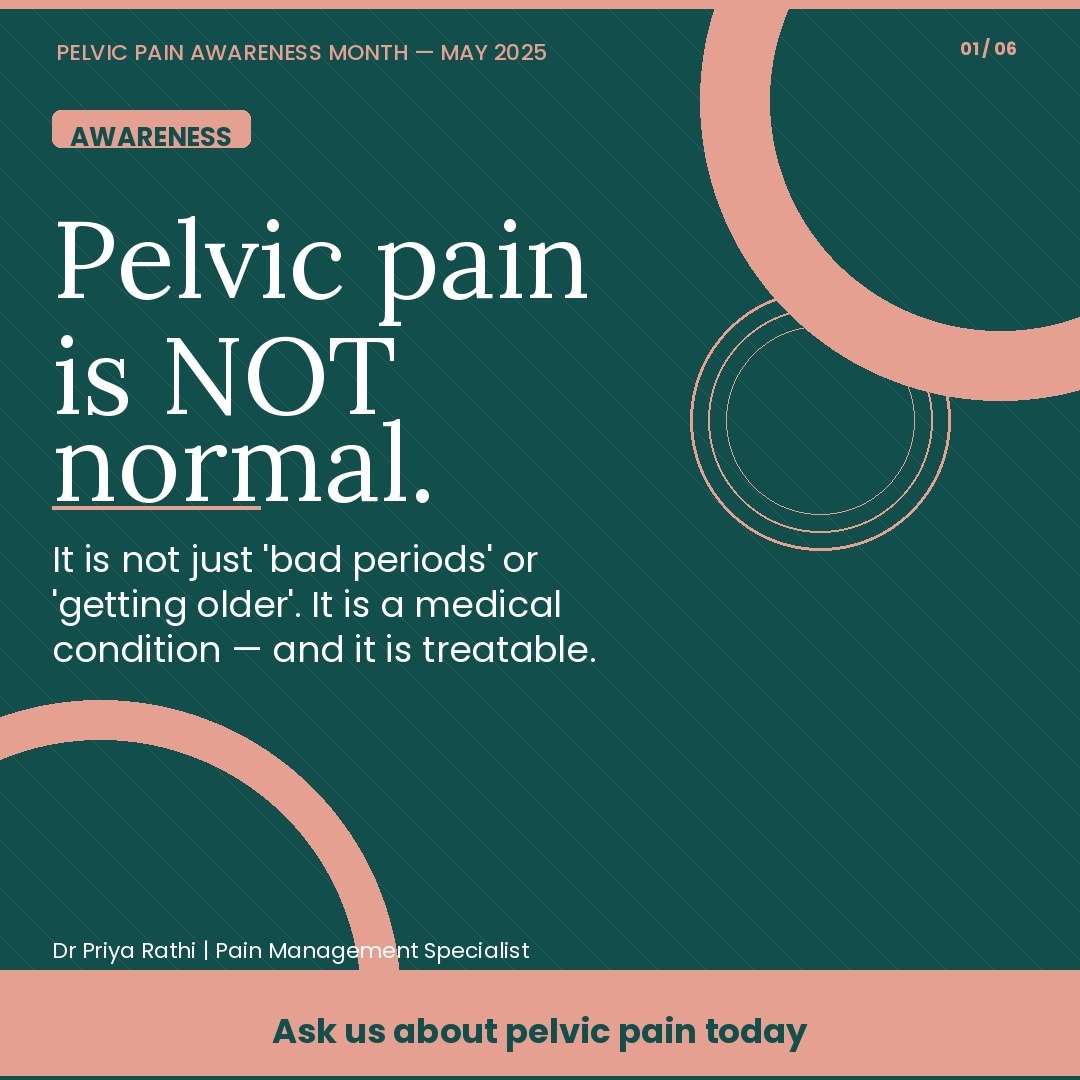
Everything you need to know about pelvic pain in men and women — causes, why it goes untreated, and the treatments that actually work. By Dr Priya Rathi · Pain Management Specialist May — Pelvic Pain Awareness Month SPECIALIST PROFILE Dr Priya Rathi Pain Management Specialist · Pelvic Pain · Dry Needling · Interventional Pain Dr Priya Rathi is a specialist in interventional pain management with focused expertise in chronic pelvic pain in both men and women. Her skills include botulinum toxin injections for pelvic floor spasm, nerve block procedures, and advanced dry needling for musculoskeletal and pelvic trigger points. She combines evidence-based interventional techniques with a compassionate approach — particularly for patients who have been told their pain is 'unexplainable' or that nothing can be done. Patients travel from across the region to see Dr Rathi for pelvic pain conditions that have not responded to standard treatments. Her results in cases of endometriosis-related pain, pelvic floor dysfunction, chronic prostatitis, and pudendal neuralgia speak for themselves. UNDERSTANDING PELVIC PAIN Q What is chronic pelvic pain? Chronic pelvic pain (CPP) is defined as persistent pain in the lower abdomen, pelvis, perineum, or hips that lasts for six months or longer. It is not a disease itself — it is a symptom that can arise from multiple overlapping causes across the nervous system, muscles, organs, and joints. It is one of the most common pain conditions in the world, yet one of the most under-recognised and under-treated. Chronic pelvic pain affects up to 1 in 5 women and a significant proportion of men — making it more common than asthma or migraine. KEY SEO FACT FOR YOUR WEBSITE Chronic pelvic pain affects an estimated 15–20% of women of reproductive age and up to 15% of men. It accounts for 40% of all gynaecological laparoscopies and 10–15% of all gynaecology outpatient referrals. Q What does chronic pelvic pain feel like? Pelvic pain varies enormously between patients. Common descriptions include: • A dull, constant ache in the lower abdomen or pelvis • Sharp, stabbing pain in the perineum, tailbone, or groin • Pain that worsens with sitting, prolonged standing, or sexual intercourse • A sensation of pressure or heaviness in the pelvic region • Pain referred to the inner thighs, hips, lower back, or buttocks • Bladder or bowel symptoms accompanying the pain (urgency, frequency, incomplete emptying) • Pain with periods (dysmenorrhoea) or pain independent of the menstrual cycle Because pelvic pain can refer to distant areas and mimic other conditions, patients often receive multiple incorrect diagnoses — including irritable bowel syndrome, recurrent urinary tract infections, or 'unexplained' back pain — before a correct assessment is made. Q What causes chronic pelvic pain? In most patients, pelvic pain has multiple simultaneous causes. The most common are: Pelvic Floor Dysfunction Muscles too tight (hypertonic), too weak, or in spasm — causing deep, diffuse pain and trigger points. Nerve Sensitisation Pudendal nerve, obturator nerve, or other pelvic nerves become hypersensitive and fire constantly. Endometriosis Uterine-like tissue outside the uterus causes inflammatory pain — often severe, cyclical, and undertreated. Chronic Prostatitis / CPPS In men: prostate and pelvic floor dysfunction cause perineal, testicular, and urinary pain. Interstitial Cystitis Bladder wall inflammation causing pain that mimics recurrent UTI without infection. Central Sensitisation The brain amplifies pain signals — normal sensations become painful. Neurological, not psychological. PELVIC PAIN IN WOMEN Q Why is pelvic pain in women so often dismissed? Research consistently shows that women's pain is taken less seriously than men's — and pelvic pain is particularly vulnerable to dismissal. Conditions like endometriosis carry an average diagnosis delay of 7 to 10 years. During that time, patients are frequently told: What women are told 'It's just bad periods.' 'It's stress.' 'Everything looks normal on your scan.' 'Have you tried the pill?' 'It's something you'll grow out of.' The clinical reality These responses reflect a gap in training, not a gap in pathology. Many women have significant, treatable conditions that standard investigations miss — and that respond well to specialist assessment. If your pain has been dismissed, you are not alone — and you are not wrong. Seek a specialist who focuses specifically on pelvic pain. Q What conditions commonly cause pelvic pain in women? • Endometriosis — affects 1 in 10 women; causes severe cyclical and non-cyclical pain • Polycystic Ovary Syndrome (PCOS) — pelvic discomfort, hormonal pain • Pelvic Inflammatory Disease (PID) — infection-related scarring and chronic pain • Vulvodynia — persistent vulvar pain without an obvious identifiable cause • Vaginismus — involuntary pelvic floor muscle spasm causing painful intercourse • Adenomyosis — uterine lining grows into the muscle wall, causing heavy, painful periods • Pelvic floor hypertonia — chronically overactive pelvic floor muscles • Pudendal neuralgia — pain along the pudendal nerve distribution (perineum, clitoris, labia) PELVIC PAIN IN MEN Q Can men have chronic pelvic pain? Absolutely — and it is far more common than most people realise. Chronic pelvic pain in men is often labelled Chronic Pelvic Pain Syndrome (CPPS), also called chronic non-bacterial prostatitis. It is estimated to affect between 10 and 15% of men at some point in their lives. Despite its prevalence, male pelvic pain is seriously under-recognised. Men are less likely to discuss the symptoms, and clinicians are less likely to consider the diagnosis — leading to years of mismanagement, often with repeated courses of antibiotics that produce no lasting benefit. COMMON SYMPTOMS OF MALE PELVIC PAIN Pain in the perineum (between scrotum and anus) · Testicular or groin aching · Pain or burning with or after ejaculation · Urinary urgency or frequency · Tailbone or lower back pain · Pelvic heaviness or pressure · Pain with prolonged sitting Q What causes pelvic pain in men? • Pelvic floor muscle hypertonicity — the most common and most undertreated cause • Pudendal nerve entrapment or sensitisation • Posterior scrotal / perineal trigger points • Prostate-related referred pain without active bacterial infection • Sacroiliac joint dysfunction contributing to pelvic floor tension • Post-surgical pelvic pain (after hernia repair, prostatectomy, or vasectomy) TREATMENTS — WHAT ACTUALLY WORKS Q What are the most effective treatments for chronic pelvic pain? The right treatment depends on the dominant cause in your individual case. Most patients benefit from a combination approach. A specialist assessment with Dr Priya Rathi will identify which treatments are most appropriate for you. 1. Botulinum Toxin Injections (Botox) for Pelvic Floor Spasm When the pelvic floor muscles are hypertonic — chronically overactive and in spasm — botulinum toxin injected directly into the affected muscles causes them to relax. This is particularly effective for: • Vaginismus and painful intercourse • Levator ani syndrome (deep pelvic floor pain) • Male pelvic floor hypertonicity in CPPS • Post-surgical pelvic floor spasm HOW BOTULINUM TOXIN HELPS PELVIC PAIN Botulinum toxin blocks the acetylcholine signal that keeps the muscle in spasm. Within 1–2 weeks, muscles relax — reducing pain, enabling physiotherapy to be far more effective, and improving quality of life. Effects last 3–4 months. The injection is typically performed under ultrasound or EMG guidance for precision. 2. Nerve Block Injections Targeted nerve block injections interrupt the pain cycle at its source. For pelvic pain, the most commonly used include: • Pudendal nerve block — for pudendal neuralgia and perineal pain • Superior hypogastric plexus block — for visceral pelvic pain from bladder, uterus, or prostate • Ganglion impar block — for coccydynia (tailbone pain) and perineal burning • Trigger point injections — for localised pelvic floor and hip muscle trigger points Nerve blocks can provide immediate relief and are also diagnostic — if a specific block gives you significant pain reduction, it confirms which nerve is driving your pain and guides longer-term management. 3. Dry Needling for Pelvic Floor Trigger Points Pelvic floor muscles — particularly the levator ani, obturator internus, piriformis, and hip adductors — develop trigger points (tight, tender knots) that refer pain throughout the pelvis, hips, and perineum. Dry needling targets these points directly with a fine needle, disrupting the abnormal electrical activity and allowing the muscle to reset. This is often the treatment that produces relief when nothing else has worked — because trigger points cannot be reached by oral medication, and standard physiotherapy exercises alone cannot deactivate them. DR PRIYA RATHI — EXPERT IN PELVIC DRY NEEDLING Dr Rathi has specialist training in dry needling for pelvic and musculoskeletal pain. Working with the pelvic floor requires precise anatomical knowledge and sensitivity to the complexity of these patients — she brings both. Her approach is safe, effective, and tailored to each patient's presentation. 4. Pelvic Floor Physiotherapy A cornerstone of pelvic pain treatment. Specialist physiotherapists assess both hypertonic (too tight) and hypotonic (too weak) pelvic floor presentations and provide hands-on treatment, biofeedback, and progressive exercise programmes. For best results, physiotherapy is combined with interventional treatments such as botulinum toxin or dry needling. 5. Neuropathic & Anti-inflammatory Medications • Pregabalin or gabapentin — for nerve-mediated pelvic pain • Duloxetine — for central sensitisation and depression-associated pain amplification • Low-dose naltrexone — emerging evidence in endometriosis and pelvic neuroinflammation • Hormonal therapy — for endometriosis, adenomyosis, and cyclical pelvic pain GETTING HELP Q When should I see a pelvic pain specialist? Do not wait. Seek specialist assessment if any of the following apply: • Pelvic pain has lasted more than 3 months • Pain affects your sleep, work, relationships, or sexual health • You have been given repeated antibiotics for 'prostatitis' or 'UTI' with no lasting benefit • Scans and blood tests have come back 'normal' but you still have pain • You have been told to simply accept the pain • Pain is worsening over time WHAT TO SAY TO YOUR GP 'I have had chronic pelvic pain for [X months/years]. I would like a referral to a pain medicine specialist or pelvic pain clinic for a comprehensive assessment including consideration of interventional treatments such as nerve blocks, botulinum toxin, and dry needling.' Q Why is pelvic pain so often undertreated? Pelvic pain sits at the intersection of multiple specialties — gynaecology, urology, gastroenterology, and pain medicine — and often falls through the gaps between them. Each specialist addresses their own organ system, but nobody assesses the whole picture: the nervous system, the muscles, the central sensitisation, and the referred pain patterns. This is precisely why a dedicated pelvic pain specialist is essential. Dr Priya Rathi takes a whole-person, multidisciplinary approach — assessing all contributing factors and designing a targeted treatment plan rather than treating a single organ in isolation. Q Is pelvic pain curable? For many patients, significant and lasting pain relief is achievable. 'Cure' depends on the underlying cause — endometriosis, for example, may require ongoing management — but with the right combination of treatments, most patients experience a dramatic reduction in pain, improved function, and a return to normal life. The key is receiving a proper assessment early and being offered the full range of available treatments — not simply being told to tolerate it. Medical Disclaimer This article is written for general patient information and website SEO purposes. It does not constitute medical advice and does not replace a consultation with a qualified healthcare professional. Every patient's condition is unique. Please consult Dr Priya Rathi or a qualified pain medicine specialist for a personalised assessment and treatment plan. © Dr Priya Rathi · Pain Management Specialist · All rights reserved.


