

+918048128529

Currently it only shows your basic business info. Start adding relevant business details such as description, images and products or services to gain your customers attention by using Boost 360 android app / iOS App / web portal.

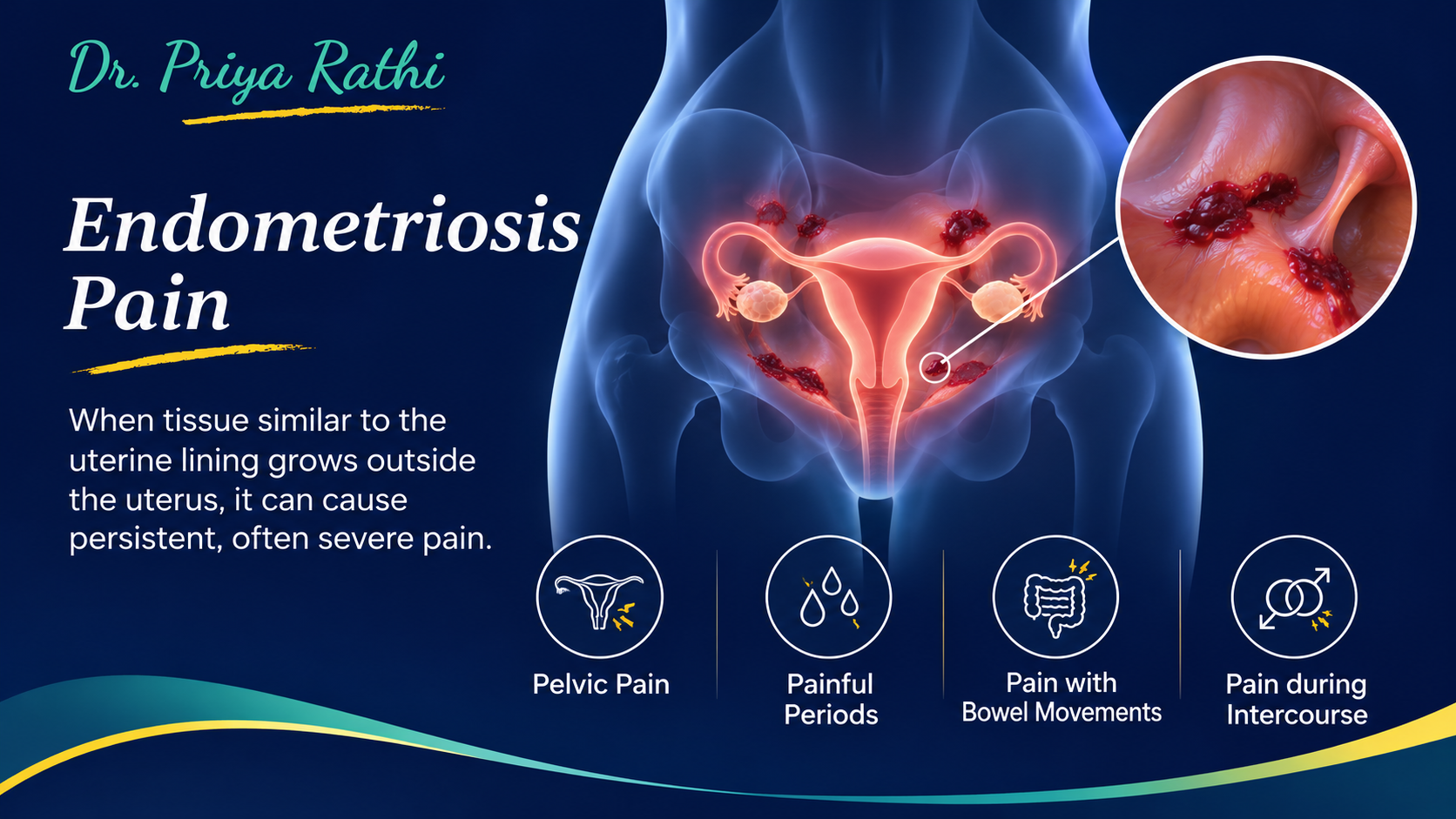
By Dr. Priya Rathi, Sigma Spine and Pain Clinic, Baner, Pune Living with endometriosis pain Endometriosis affects many women, and its hallmark is pain: painful periods, pelvic pain between periods, pain during intercourse, lower back pain, and discomfort while sitting, walking or passing urine or stool. Many women are told the pain is 'just part of having endometriosis' and are left to manage it with painkillers. What is often missed is that muscles play a large role in this pain. And unlike the endometriosis lesions themselves, muscle pain is something that can be assessed and treated directly. How muscles get involved in endometriosis pain Endometriosis causes inflammation inside the pelvis. Over months and years, the body responds in ways that affect muscles and nerves: 1. Protective muscle guarding. When the pelvis is repeatedly inflamed and painful, the surrounding muscles tighten automatically to 'protect' the area. This is similar to how you tense your shoulder after an injury. Over time, the tightness becomes constant, even when the inflammation settles. 2. Pelvic floor muscle tension. The pelvic floor muscles often become tight and overactive. This can cause deep pelvic pain, pain with intercourse, urgency, a feeling of heaviness, and difficulty fully relaxing. 3. Myofascial trigger points. Tight muscles develop small, hypersensitive knots called trigger points. These can refer pain to other areas. Muscles commonly involved include the lower abdominal wall, iliopsoas (deep hip flexor), piriformis and deep gluteal muscles, obturator internus, quadratus lumborum, and the muscles around the lower back and hips. This is why endometriosis pain may be felt in the lower back, buttocks, groin or thighs, not only in the abdomen. 4. Pain sensitisation. Because the pelvic organs and the muscles and skin of the same region share nerve pathways, ongoing pain from the pelvis can make the nervous system more sensitive. Muscles then hurt more easily, and the pain can continue even after the original trigger has eased. 5. Posture and movement changes. Women in pain often hunch, avoid movement, or sit unevenly. This overloads the lower back, hips and pelvis and adds a second layer of muscular pain. The result is a cycle: pain causes muscle tension, tension causes more pain, and the cycle keeps going. What is dry needling? Dry needling is a procedure in which very fine, sterile, single-use needles are inserted into tight muscles and trigger points. No medicine is injected, which is why it is called 'dry.' It is a modern, anatomy-based technique used for muscle and myofascial pain. How dry needling can help When a needle reaches a trigger point, it can produce a brief twitch in the muscle, followed by relaxation. This may help in several ways: • Releases tight bands and trigger points in the muscles of the back, hips, abdominal wall and pelvic region • Improves local blood flow to muscles that have been tense and under-supplied • Reduces the pain signals coming from sensitive muscle tissue, helping calm an overactive nervous system • Improves flexibility and movement, making sitting, walking, exercise and daily activities more comfortable • Supports other treatment, such as stretching, posture correction and pelvic floor exercises, which work better once the muscles are less tense Many patients notice that their back, hip and pelvic muscle pain, and the sense of constant tightness, reduces. Results vary from person to person, and several sessions are usually needed. An important note Dry needling does not treat or cure endometriosis itself. It is meant to address the muscular and myofascial part of the pain, alongside the care you receive from your gynaecologist, such as medication, hormonal therapy or surgery where needed. Think of it as a complementary option that targets one important piece of the puzzle. If you have severe or worsening pelvic pain, heavy bleeding, fever, or any new symptoms, please see your gynaecologist first. What to expect at your visit 1. Detailed assessment of your pain history, along with a physical examination of your back, hips, abdominal wall and posture to identify the muscles involved 2. A personalised plan that may include dry needling, along with exercises and advice on posture and daily activity 3. Gentle, step-by-step treatment using sterile single-use needles. You may feel a mild ache or twitch in the muscle, which usually settles quickly 4. Follow-up to review progress and adjust treatment Dry needling may not be suitable in some situations, such as pregnancy, active infection, bleeding disorders or blood-thinning medication. Please tell the doctor about your medical history and medicines before treatment. Who may benefit? You may benefit from a muscle-focused assessment if you have a diagnosis of endometriosis (or suspected endometriosis) and: • Persistent lower back, hip or buttock pain • Pelvic or lower abdominal pain that continues despite medical treatment • Pain when sitting for long periods or during intercourse • A feeling of tightness or heaviness in the pelvis • Pain that limits work, exercise or sleep Book an appointment You do not have to simply put up with pain. If muscle tension is part of your endometriosis pain, targeted treatment can make a real difference to how you move and feel. Dr. Priya Rathi Sigma Spine and Pain Clinic, Baner, Pune Call for an appointment: 9823743726 This article is for general information and does not replace personal medical advice. Treatment outcomes vary between individuals.


