

+918048128529

Currently it only shows your basic business info. Start adding relevant business details such as description, images and products or services to gain your customers attention by using Boost 360 android app / iOS App / web portal.

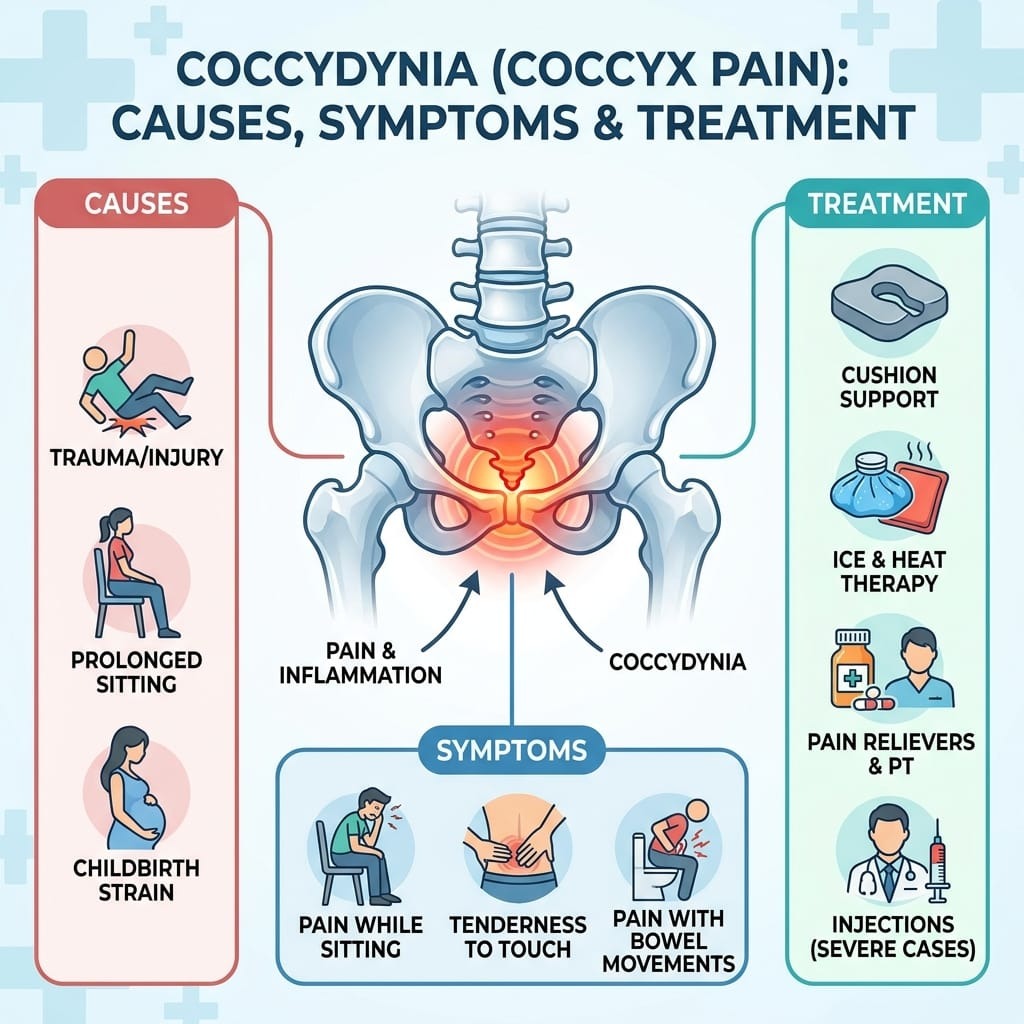
What Is Tailbone Pain (Coccydynia)? Tailbone pain, medically known as coccydynia, is discomfort or pain in and around the coccyx — the small, triangular bone at the very base of the spine. While it may seem like a minor issue, tailbone pain can significantly affect daily activities like sitting, standing up, driving, or even sleeping. At Sigma Spine and Pain Clinic in Pune, we regularly see patients whose tailbone pain has gone undiagnosed or mistreated for months, simply because they weren't sure which specialist to consult. As a dedicated pain management specialist in Pune, Dr Priya Rathi helps patients get an accurate diagnosis and a treatment plan tailored to the root cause of their pain — not just the symptoms. Common Causes of Tailbone Pain Understanding the cause of your coccyx pain is the first step toward effective treatment. Common causes include: • Trauma or injury — falling directly onto the tailbone, common after a slip on stairs, in the bathroom, or during sports • Prolonged sitting — especially on hard or poorly cushioned surfaces (common in desk jobs, long commutes, or long drives) • Childbirth — the coccyx can be bruised or fractured during vaginal delivery • Repetitive strain — from cycling, rowing, or certain postures • Degenerative changes — wear and tear of the joints connecting the coccyx to the sacrum • Idiopathic causes — in some cases, no clear cause is identified Symptoms That May Indicate Coccydynia You may be experiencing tailbone pain if you notice: • Sharp or dull pain localized at the base of the spine • Pain that worsens when sitting, especially on hard chairs • Pain when transitioning from sitting to standing • Discomfort during bowel movements • Pain during or after sexual intercourse • Tenderness when the area is touched directly If these symptoms sound familiar, it's worth consulting a pain specialist rather than waiting for it to resolve on its own — untreated coccydynia can become chronic. How Is Tailbone Pain Diagnosed? At our Sigma Spine and Pain clinic, diagnosis typically involves: 1. Detailed history-taking — understanding when the pain started, any recent falls, childbirth, or prolonged sitting 2. Physical examination — assessing tenderness, range of motion, and posture 3. Imaging (if required) — X-rays or MRI to rule out fractures, dislocation, or other spinal issues 4. Ruling out other causes — such as pilonidal cysts, haemorrhoids, or referred pain from the lower spine Tailbone Pain Treatment Options in Pune Treatment is customized based on severity, cause, and how long the pain has persisted. Options we offer include: 1. Conservative Management • Cushioned, coccyx-shaped seating (donut or wedge cushions) • Activity modification to reduce direct pressure • Ice or heat therapy in the initial phase 2. Medications • Anti-inflammatory medication to reduce pain and swelling • Muscle relaxants where indicated • Stool softeners if bowel movements aggravate the pain 3. Physical Therapy • Pelvic floor physiotherapy • Stretching and strengthening exercises for surrounding muscles • Postural correction guidance 4. Interventional Pain Management For patients who don't respond to conservative treatment, we offer advanced, minimally invasive procedures, including: • Coccygeal nerve block injections — targeted injections to reduce inflammation and pain directly at the source • Ganglion impar block — a specialized nerve block often effective for chronic coccyx pain • Radiofrequency ablation — for long-lasting relief in select chronic cases Why Choose a Pain Specialist Over a General Physician? Tailbone pain sits at the intersection of orthopedics, neurology, and pain medicine. A pain management specialist is trained specifically in diagnosing the source of pain and offering targeted, minimally invasive interventions — often avoiding the need for surgery altogether. This focused expertise frequently means faster, more lasting relief than general treatment alone. Frequently Asked Questions How long does tailbone pain usually last? Mild cases often resolve within a few weeks with conservative care. Chronic cases lasting more than 2–3 months typically require evaluation by a pain specialist. Can tailbone pain be a sign of something serious? In most cases, it is not serious. However, persistent pain should be evaluated to rule out fractures, tumors, or referred pain from the spine. Is sitting on a donut cushion enough to treat coccydynia? It helps manage symptoms but doesn't address the underlying cause. A proper diagnosis ensures you're treating the actual problem. Are coccyx injections painful? These are performed under local anaesthesia and image guidance, making the procedure quick and well-tolerated by most patients. Book a Consultation for Tailbone Pain Treatment in Pune If you're dealing with persistent tailbone pain, don't wait for it to become chronic. Dr Priya Rathi, Spine and Pain specialist offers comprehensive evaluation and treatment for coccydynia at Sigma Spine And Pain Clinic in Baner, Pune. 📍 Address: Sigma Spine and Pain Clinic, Baner, Pune 📞 Phone:9823743726🌐 Website: www.drpriyarathi.com 🗓️ Book an Appointment Disclaimer: This article is for informational purposes only and does not substitute professional medical advice. Please consult a qualified pain specialist for diagnosis and treatment.


