

+918048128529

Currently it only shows your basic business info. Start adding relevant business details such as description, images and products or services to gain your customers attention by using Boost 360 android app / iOS App / web portal.

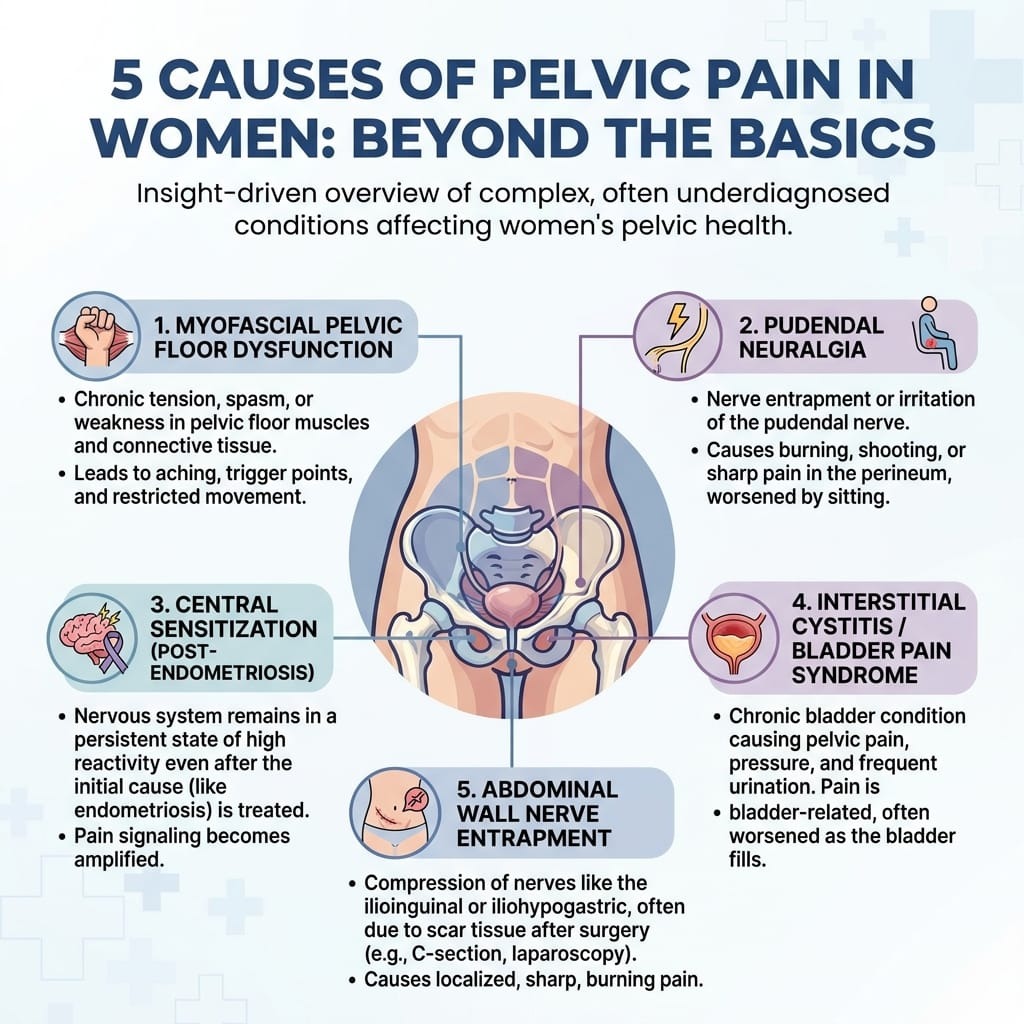
• Myofascial pelvic pain / pelvic floor dysfunction – hypertonic or trigger-point-laden pelvic floor muscles (levator ani, obturator internus), often causing deep, aching pain worsened by sitting or intercourse • Pudendal neuralgia – entrapment or irritation of the pudendal nerve, causing burning, shooting pain in the perineum/vulva, typically worse with sitting and relieved standing • Endometriosis-related central sensitization – even after lesions are treated, the nervous system can remain sensitized, producing chronic pain out of proportion to residual disease (a key reason gynaecologic treatment alone sometimes fails) • Interstitial cystitis / bladder pain syndrome – often overlaps with pelvic pain, may be misdiagnosed as gynaecologic in origin; bladder filling/emptying worsens symptoms • Abdominal wall or nerve entrapment syndromes (e.g., ilioinguinal, iliohypogastric, or genitofemoral neuralgia) – often post-surgical (C-section, hernia repair), point-tender over a specific nerve distribution, worsened by abdominal wall tensing (Carnett's sign positive) Pain physicians also routinely screen for chronic pelvic pain syndrome as a diagnosis of exclusion, since multiple contributors (visceral, muscular, neural, psychological) often coexist — which is why treatment frequently needs a multidisciplinary approach rather than a single 'fix.'


