

+918048128529

Currently it only shows your basic business info. Start adding relevant business details such as description, images and products or services to gain your customers attention by using Boost 360 android app / iOS App / web portal.

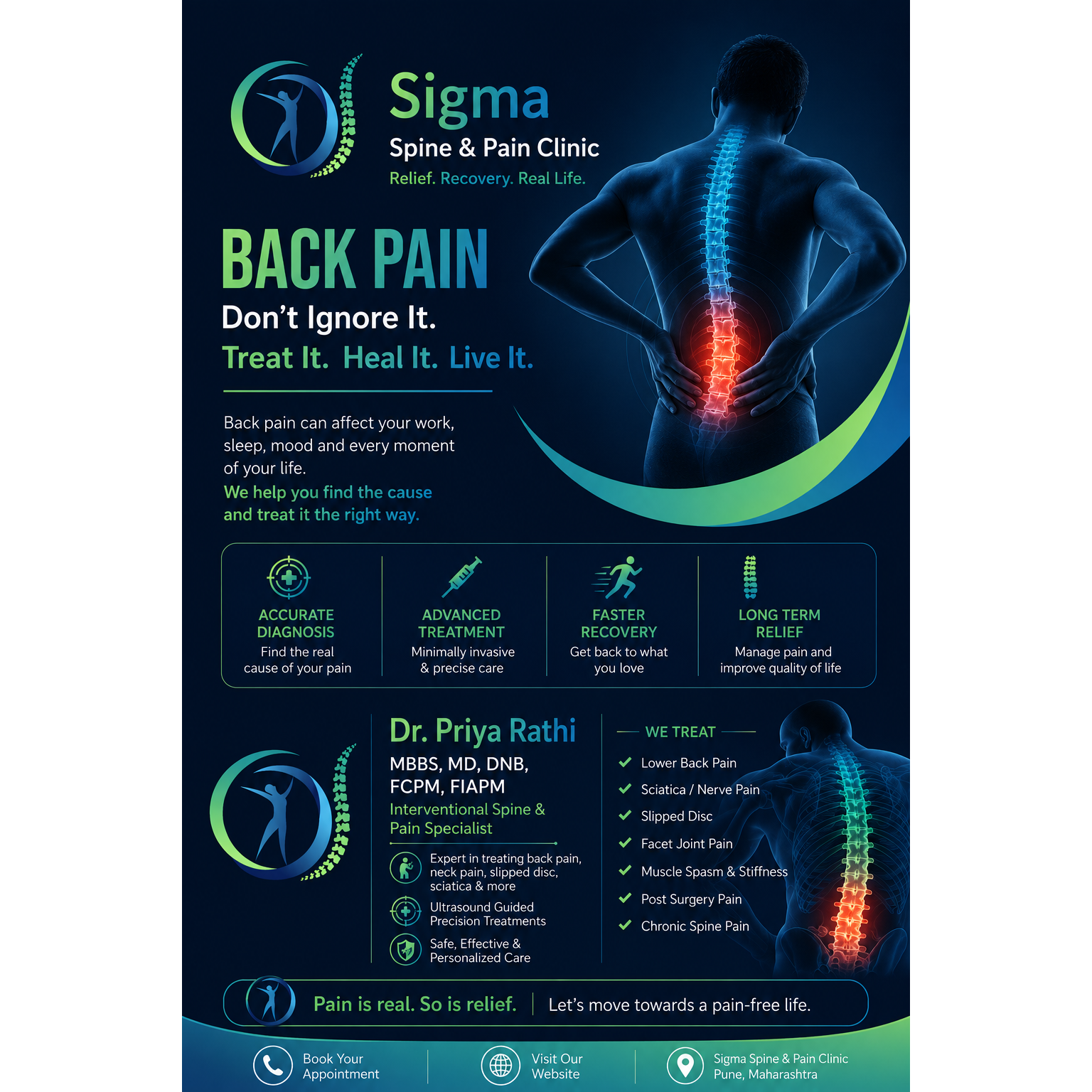
Introduction Back pain is one of the most common reasons people visit a doctor, and for many, it's more than a passing ache — it's a daily struggle that affects work, sleep, and quality of life. If you've been living with persistent back pain, you don't have to accept it as 'just part of getting older' or 'something that will go away on its own.' Dr. Priya Rathi, a specialist in pain management, helps patients understand the root cause of their discomfort and find a treatment plan that actually works. This guide covers the most common causes of back pain, warning signs you shouldn't ignore, and the treatment options available at Dr. Rathi's clinic. What Causes Back Pain? Back pain can stem from a wide range of issues, including: • Muscle or ligament strain — often from heavy lifting, sudden awkward movements, or poor posture • Herniated or bulging discs — when the cushioning discs between vertebrae press on nearby nerves • Degenerative disc disease — natural wear and tear that occurs with age • Spinal stenosis — narrowing of the spinal canal that puts pressure on nerves • Sciatica — pain that radiates along the sciatic nerve, from the lower back down the leg • Arthritis — inflammation of the joints in the spine • Poor posture and sedentary lifestyle — especially common with desk jobs and long hours of screen time • Injury or trauma — from accidents, falls, or sports Because so many conditions can cause similar symptoms, an accurate diagnosis is the first step toward effective treatment. Common Symptoms of Back Pain Back pain can present differently depending on the underlying cause. Common symptoms include: • Dull, aching pain in the lower or upper back • Sharp, shooting pain that radiates to the legs (sciatica) • Stiffness that limits range of motion • Muscle spasms • Pain that worsens with sitting, standing, or bending • Numbness or tingling in the legs or feet When Should You See a Pain Specialist? Occasional mild back pain often improves with rest and home care. However, you should consult a pain specialist like Dr. Priya Rathi if you experience: • Pain lasting longer than a few weeks • Pain that interferes with daily activities, sleep, or work • Numbness, tingling, or weakness in the legs • Pain following an injury or accident • Back pain accompanied by unexplained weight loss, fever, or bowel/bladder changes (seek urgent care) • Pain that hasn't responded to physiotherapy or over-the-counter medication A pain specialist looks beyond temporary symptom relief to identify and treat the underlying cause — reducing the risk of the pain becoming chronic. How Dr. Priya Rathi Diagnoses Back Pain A thorough diagnosis is central to effective treatment. Dr. Rathi's approach typically includes: 1. Detailed medical history — understanding your symptoms, lifestyle, and any prior injuries 2. Physical examination — assessing posture, range of motion, and areas of tenderness 3. Imaging tests — X-rays, MRI, or CT scans when needed to visualize the spine and discs 4. Nerve studies — in cases of suspected nerve involvement, such as sciatica This comprehensive evaluation allows for a personalized treatment plan rather than a one-size-fits-all approach. Treatment Options for Back Pain Dr. Rathi offers a range of evidence-based treatments tailored to each patient's condition and severity: Non-Surgical Treatments • Physical therapy to strengthen supporting muscles and improve flexibility • Medication management, including anti-inflammatories and muscle relaxants • Epidural steroid injections to reduce inflammation around irritated nerves • Nerve blocks to interrupt pain signals • Radiofrequency ablation for longer-lasting relief in chronic cases • Lifestyle and posture guidance to prevent recurrence Minimally Invasive Procedures For patients who don't find relief through conservative treatment, Dr. Rathi offers minimally invasive interventional procedures designed to target the exact source of pain with minimal downtime. When Surgery Is Necessary In cases involving significant structural issues — such as severe disc herniation or spinal instability — Dr. Rathi will refer patients to a trusted spine surgeon, ensuring coordinated, patient-centered care. Tips for Preventing Back Pain While not all back pain is preventable, these habits can significantly reduce your risk: • Maintain good posture, especially when sitting for long periods • Strengthen your core muscles through regular exercise • Lift heavy objects using your legs, not your back • Avoid prolonged sitting — take breaks to stand and stretch • Maintain a healthy weight to reduce spinal load • Invest in an ergonomic chair and desk setup if you work at a computer Frequently Asked Questions How long does back pain usually last? Acute back pain often resolves within a few weeks with rest and conservative care. Pain lasting longer than 12 weeks is considered chronic and typically requires specialized evaluation. Is back pain a sign of something serious? Most back pain is not serious and improves with time and proper care. However, certain warning signs — like numbness, weakness, or bladder/bowel changes — require immediate medical attention. What's the difference between a pain specialist and an orthopedic doctor? A pain specialist focuses specifically on diagnosing and managing pain through a range of non-surgical and minimally invasive techniques, often as an alternative to surgery. Do I need a referral to see Dr. Priya Rathi? No , You can directly visit Dr Priya Rathi whenever you have pain that has lasted for more than 3 months. Book a Consultation with Dr. Priya Rathi You don't have to live with back pain. Dr. Priya Rathi and her team specialize in identifying the root cause of your discomfort and creating a personalized treatment plan to help you get back to the activities you love. [Book an appointment today] or call [9823743726] to schedule your consultation. ________________________________________ This article is for informational purposes only and is not a substitute for professional medical advice. Please consult Dr. Priya Rathi or a qualified healthcare provider for diagnosis and treatment recommendations specific to your condition.


